













Apple’s most important annual event of the year is just around the corner, and anticipation is building fast. The Cupertino tech giant has officially confirmed that WWDC 2026 – the 37th edition of its Worldwide Developers Conference – will take place from June 8 through June 12, 2026, at Apple Park in California. The opening keynote, set for the morning of June 8, is expected to be a landmark moment for Apple’s software ecosystem, with iOS 27, a radically reinvented Siri chatbot, and the final farewell to Intel-based Macs all on the agenda.
For the first time in the event’s history, Apple’s own official announcement for WWDC explicitly flagged “AI advancements” as a headline attraction – a clear signal that artificial intelligence will be front and centre in everything Apple unveils. With years of delayed promises around Siri’s intelligence overhaul, the industry is watching closely to see if 2026 is finally the year Apple makes good.
Here is a comprehensive breakdown of everything expected at WWDC 2026.
WWDC 2026: Dates, Format, and What to Expect from the Keynote
Apple’s Worldwide Developers Conference is the company’s premier software event, used each year to preview the next generation of its operating systems and developer tools. Occasionally, significant hardware also makes an appearance, as it did in 2023 when the Apple Vision Pro was introduced to the world.
This year’s conference will follow Apple’s now-established hybrid format. The keynote address and Platforms State of the Union will be pre-recorded and streamed globally across Apple’s platforms, including Apple.com, the Developer app, Apple TV, and YouTube. A select group of developers and students will also be invited to attend in person at Apple Park, where they can meet Apple engineers, take part in labs and activities, and connect with the global developer community.
Apple is conducting a lottery for in-person event seats, with the draw scheduled for March 30, and selected attendees expected to be notified by approximately April 2. Apple’s Swift Student Challenge is also returning, giving student developers the opportunity to showcase their skills through app playgrounds.
In terms of sheer scale and significance, WWDC 2026 may well be one of Apple’s most consequential software events in years, not because of flashy new features, but because of the deeper architectural shifts happening beneath the surface.
iOS 27: The “Snow Leopard” Update Apple Has Been Building Toward
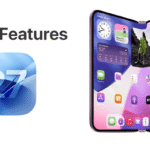
The headline software announcement at WWDC 2026 will unquestionably be iOS 27, the next major version of Apple’s iPhone operating system. But don’t expect an avalanche of new features. According to multiple reports dating back to late 2025, iOS 27 is shaping up to be what insiders are calling a “Snow Leopard” release, a nod to the 2009 macOS update that famously focused on stability, performance, and under-the-hood refinements rather than outward novelty.

A November 2025 report compared the upcoming iOS 27 to macOS Snow Leopard, describing how Apple’s software engineers are working to eradicate bugs, replace legacy code, and improve existing features across the board. Apple is said to be rewriting significant portions of the operating system, which could lead to improved battery life even on older iPhone models, a benefit that will be welcomed by users who have long complained about battery degradation on ageing handsets.
Performance and Stability at the Core
The central philosophy behind iOS 27 appears to be quality over quantity. Rather than introducing dozens of new UI-level features, Apple’s engineering teams are focusing on making the existing system more robust, more responsive, and more efficient. This under-the-hood discipline is something Apple has historically done well, and for many users, particularly those with older devices, it could be one of the most meaningful updates in years.
Refinements to the Liquid Glass design language introduced in iOS 26 are also expected. While that aesthetic overhaul was broadly well-received, it introduced some inconsistencies and visual quirks that Apple will likely address in iOS 27.
iPhone Fold Optimisations
One area where iOS 27 will introduce genuinely new functionality is in preparation for Apple’s long-anticipated iPhone Fold, which is expected to debut in the autumn of 2026 alongside the iPhone 18 Pro lineup. iOS 27 is expected to include support for side-by-side app multitasking, a feature tailor-made for a foldable form factor. However, since the iPhone Fold itself will not be unveiled until September, Apple will almost certainly hold back this aspect of iOS 27 until the device’s official introduction.
The Siri Chatbot: Apple’s Most Consequential AI Bet

If iOS 27 has one defining feature that will dominate the headlines at WWDC 2026, it is the Siri chatbot, an entirely reimagined version of Apple’s long-struggling voice assistant that promises to fundamentally change how users interact with their Apple devices.
Years in the Making
Since Apple introduced the earliest version of Apple Intelligence with iOS 18, users and developers alike have been waiting for the far more capable, contextually aware Siri that was originally promised. That rollout was delayed multiple times, with promised features failing to materialise on schedule. iOS 27 may finally mark the moment Apple delivers on those promises in a meaningful way.
A January 2026 report revealed that Apple wants to transform Siri into a full-blown conversational chatbot, one with an app-like interface capable of competing directly with OpenAI’s ChatGPT, Google’s Gemini, and Anthropic’s Claude. Apple is reportedly testing this new version of Siri internally under the codename “Campos.”
How Chatbot Siri Will Work
According to Bloomberg’s Mark Gurman, the new Siri chatbot will be baked into Apple’s software ecosystem rather than launching as a standalone app. Users will continue to trigger Siri the same way they do today, through voice activation or a button press, but the underlying experience will be dramatically different.
The chatbot Siri will be capable of:
- Searching the web with much greater depth and intelligence
- Generating content, including images and written text
- Providing coding assistance to developers
- Summarising and analysing documents and information
- Uploading and processing files
- Using personal data to complete tasks more intelligently
- Understanding on-screen content and answering questions about what the user is looking at
- Performing actions across multiple apps in sequence
Crucially, the new Siri is also expected to support both voice and text interactions, enabling genuinely back-and-forth conversations rather than the single-shot command-and-response model that has defined Siri for most of its existence.
Google Gemini as the Foundation
One of the most significant revelations about the new Siri is its underlying technology. Apple has reportedly reached an arrangement with Google in which Google Gemini serves as “the foundation” for the next generation of Apple Foundation Models. The Siri chatbot will reportedly run on a significantly advanced version of this model, known internally as Apple Foundation Models version 11, which is said to be trained with inputs from Gemini 3.
According to Gurman, this model is expected to be “competitive with Gemini 3 and significantly more capable” than the foundation model currently powering Apple’s existing AI features. To support the computational demands of running this model at scale, Apple is reportedly exploring the use of Google’s TPU servers as part of its Private Cloud Compute infrastructure.
Apple has emphasised that this arrangement will not compromise its privacy commitments. The company insists that its stringent privacy safeguards will remain in place regardless of the cloud infrastructure used.
What Siri Still Won’t Be
It is important to temper expectations appropriately. While the chatbot capabilities represent a huge leap forward, Apple’s new Siri is not expected to completely reinvent the user experience from a visual standpoint. The assistant will remain accessible through existing triggers and will not have its own dedicated home screen app. Think of it less as a brand-new application and more as the existing Siri interface becoming vastly more intelligent and capable underneath.
CoreAI: Replacing CoreML for a Generative AI World
Alongside the Siri overhaul, Apple is planning a significant infrastructure change that will affect developers building AI-powered apps. The company is reportedly set to replace its CoreML framework – long the backbone of on-device machine learning on Apple platforms – with an entirely new framework called CoreAI.
This shift reflects Apple’s recognition that the era of generative AI requires a different kind of foundational infrastructure than the classification and inference models that CoreML was originally built to support. CoreAI is expected to be better suited to running large language models, multimodal AI tasks, and generative capabilities directly on Apple Silicon hardware.
For developers, the transition to CoreAI will likely require updating apps and workflows – but the long-term benefits in terms of performance, flexibility, and capability should be considerable.
Apple Health Plus: Scaled Back, But Not Forgotten
One feature that will not make a full debut at WWDC 2026 is “Apple Health Plus,” a previously reported Apple Intelligence feature focused on AI-powered health insights. According to a February 2026 report, Apple – under the guidance of Eddy Cue – has scaled back development of this ambitious health platform, opting instead to split its capabilities across multiple smaller, more incremental releases.
Some health-related AI features may still appear in iOS 27, though no specific announcements have been confirmed. Apple’s cautious approach here reflects the sensitivity of health data and the regulatory complexity of launching AI-powered health tools at scale.
macOS 27: Stability, AI, and the End of an Era for Intel
While iOS 27 will naturally command the most attention from the general public, macOS 27 will be equally significant – perhaps more so in terms of its long-term implications for the Mac platform.
Apple Silicon Only: The Final Break with Intel
macOS 27 marks a watershed moment in Apple’s computing history: it will be the first version of macOS to require Apple Silicon, completely dropping support for Intel-based Macs. This was confirmed at WWDC 2025, when Apple announced that macOS 26 Tahoe would be the final release compatible with Intel processors.
The Intel Macs that received macOS 26 Tahoe support were limited to just four models:
- The 16-inch MacBook Pro (2019)
- The 13-inch MacBook Pro with four Thunderbolt 3 ports (2020)
- The 27-inch iMac (2020)
- The Mac Pro (2019)
Owners of these machines will be able to continue using macOS 26 Tahoe and will receive security updates through approximately 2028, but they will not be able to upgrade to macOS 27 or any subsequent macOS release.
For context, Apple began its transition from Intel to Apple Silicon in November 2020, meaning that by the time macOS 27 ships, Intel-based Macs will have had roughly six years of continued support – a generous runway by any measure.
The Future of Rosetta 2
In a related development, macOS 27 will be the last version of macOS to include full Rosetta 2 support. Rosetta 2 is the translation layer that allows apps built for Intel processors to run seamlessly on Apple Silicon Macs, and it has been an essential compatibility bridge during the transition period.
After macOS 27, Apple has indicated that only a limited subset of Rosetta functionality will be retained – primarily to support older, unmaintained gaming titles that rely on Intel-based frameworks. For all practical purposes, this means that developers who have not yet fully updated their apps to run natively on Apple Silicon will be facing an increasingly urgent deadline.
macOS 27 Features and the AI Focus
Like iOS 27, macOS 27 is expected to receive the same underlying code overhaul, delivering better performance, greater stability, and the same AI-powered Siri chatbot capabilities. The macOS 27 update will carry a California place name, as has been Apple’s tradition, though speculation about which location has yet to settle on a consensus.
Potential Hardware at WWDC 2026: M5 Mac mini and Mac Studio
While WWDC is primarily a software event, Apple has a history of debuting Mac hardware at the conference. The company introduced the M2 MacBook Air at WWDC 2022 and the M2 15-inch MacBook Air at WWDC 2023. History may repeat in 2026.
Mac mini and Mac Studio with M5 Chips
The most likely hardware announcements at WWDC 2026 are updated configurations of the Mac mini and Mac Studio, both powered by variants of Apple’s M5 chip family.

The Mac mini is expected to receive M5 and M5 Pro chips, while the Mac Studio may receive M5 Pro, M5 Max, and potentially M5 Ultra configurations. Both updates are described as performance-focused spec bumps, similar in nature to the M5 MacBook Air and the M5 Pro/M5 Max MacBook Pro updates that preceded them.
The M5 chip itself is a significant leap in AI performance. Apple has highlighted that the chip features Neural Accelerators in each GPU core, delivering:
- 3.5x faster AI performance compared to M4
- 30% faster graphics (and up to 45% faster for gaming workloads)
- 30% higher memory bandwidth
Beyond raw processing power, the updated Mac mini and Mac Studio are also expected to benefit from:
- SSD speeds of up to 14.5GB/s, a substantial increase over current configurations
- The N1 wireless networking chip, bringing Wi-Fi 7 and Bluetooth 6 to Apple’s desktop lineup
HomePod and Apple TV 4K: Possible But Unconfirmed
Two product categories that have been notably neglected in recent years are the HomePod lineup and the Apple TV 4K. The Apple TV 4K has not seen a meaningful update since 2022, and Bloomberg’s Mark Gurman has previously reported that updated HomePod models have been “ready” for some time but have been held back pending the smarter Siri that would make them significantly more useful.
It is possible, though far from certain, that WWDC 2026 could be the occasion for Apple to finally refresh these product lines, especially if the Siri chatbot is ready to power a more capable, conversational home assistant experience.
What WWDC 2026 Signals About Apple’s AI Strategy
Stepping back from the individual product announcements, WWDC 2026 tells a broader story about where Apple is heading with its AI strategy and the challenges the company is working to overcome.
Apple was, by many assessments, late to the generative AI revolution. While OpenAI, Google, and Microsoft moved aggressively into large language models and conversational AI in 2023 and 2024, Apple’s response was cautious, incremental, and repeatedly delayed. The promised intelligent Siri of iOS 18 largely failed to materialise on schedule. Apple Intelligence, while ambitious in vision, arrived in pieces rather than as the cohesive experience Apple had advertised.
WWDC 2026 represents Apple’s attempt to close that gap decisively. By partnering with Google on foundation model training, transitioning to a new CoreAI framework, and rebuilding Siri from the ground up as a capable conversational AI, Apple is making a significant bet that it can leapfrog the competition by delivering a privacy-first AI experience that is deeply integrated into its hardware and software ecosystem.
Whether Apple succeeds will depend not just on the technology itself, but on execution, something the company has struggled with in the AI space more than almost any other domain.
Hints at Future Products: iPhone Fold and the Touchscreen MacBook Pro
WWDC 2026 may also serve as an early preview of two transformative products expected later in 2026 and beyond.
The iPhone Fold – Apple’s first foldable iPhone – is widely expected to launch alongside the iPhone 18 Pro models in September 2026. iOS 27’s multitasking features and interface optimisations for foldable displays will provide some early glimpses of what to expect.
Meanwhile, rumours persist about a touchscreen MacBook Pro featuring an OLED display and M6 chips, though some reports suggest this product could slip into early 2027. WWDC 2026 may offer subtle hints about the interface changes being made to macOS in anticipation of touchscreen inputs.
Key WWDC 2026 Dates and Takeaways
- Event Dates: June 8–12, 2026
- Location: Apple Park, Cupertino, California (hybrid format)
- Keynote: Monday, June 8, streamed globally
- In-Person Lottery: March 30, 2026 (notifications by April 2)
- Expected Software: iOS 27, iPadOS 27, macOS 27, watchOS 27, tvOS 27, visionOS 27
- Headline Feature: Siri Chatbot (internally codenamed “Campos”)
- AI Framework: CoreAI replacing CoreML
- Mac Transition: macOS 27 becomes Apple Silicon-only; final Rosetta 2 support
- Potential Hardware: M5 Mac mini, M5 Mac Studio, possibly HomePod and Apple TV 4K
Final Thoughts: WWDC 2026 Is About Depth, Not Breadth
WWDC 2026 is shaping up to be one of the most strategically significant Apple conferences in years – not because it will flood users with dozens of new features, but because the changes it introduces cut deep into the foundations of Apple’s platforms.
A smarter, chatbot-capable Siri that finally delivers on years of AI promises. A new CoreAI framework positioning Apple for the next decade of on-device intelligence. A macOS that has fully shed its Intel past and committed entirely to Apple Silicon. And a suite of operating system updates that prioritise doing things well over doing things first.
If Apple executes on all of this, WWDC 2026 will be remembered as the conference where Apple finally, decisively, planted its flag in the era of generative AI – and proved that the wait was worth it.
WWDC 2026 keynote begins Monday, June 8, 2026. Follow our live coverage for all the announcements as they happen.
0 Comments
Be the first to comment.